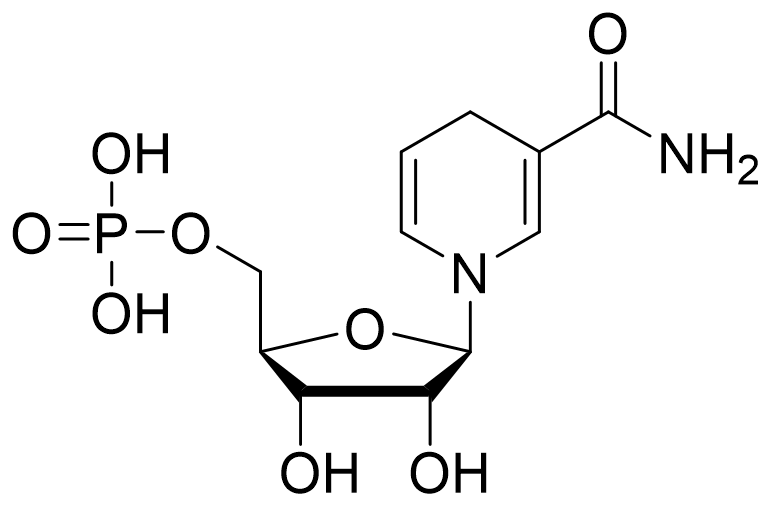
Reduced nicotinic acid riboside (NARH) is a form of nicotinic acid riboside. It's a type of vitamin B3 derivative. NARH can be converted to nicotinamide adenine dinucleotide (NAD+) in the body. NAD+ is crucial for various cellular processes, including energy production and DNA repair. NARH may have potential benefits in improving cellular health and combating age-related decline.
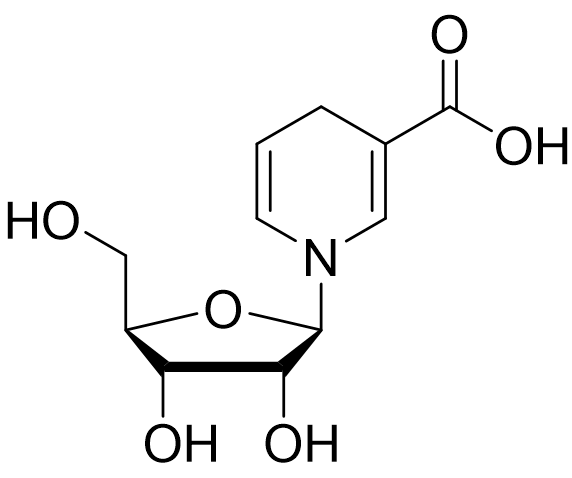
Structure
Chemical Name: Reduced Nicotinic Acid Riboside
Molecular Weight: 257.24
Molecular Formula: C11H16NO6
CAS No.: 6005-29-4
Application of NARH
NARH is being explored as a novel NAD⁺ precursor in the development of functional foods and supplements aimed at promoting healthy aging and metabolic health.
NARH contributes to the biosynthesis of NAD⁺, which is essential for various metabolic processes and cellular functions.
By boosting NAD⁺ levels, NARH may offer therapeutic benefits for age-related diseases, including metabolic and cardiovascular disorders.
NADH is reduced nicotinamide adenine dinucleotide, which is a crucial coenzyme in cells. It is formed when NAD+ accepts a hydrogen atom and two electrons. NADH plays a key role in cellular respiration, carrying high-energy electrons to the electron transport chain to generate ATP, the cell's energy currency, thus facilitating energy production. Common salt of NADH is disodium salt NADH-2Na.
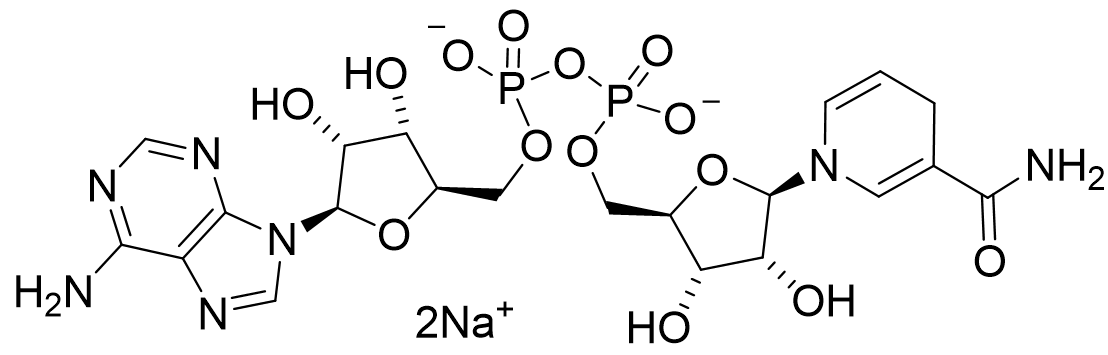
Structure
Chemical Name: Reduced β-Nicotinamide Adenine Dinucleotide Disodium Salt.
Molecular Weight: 709.41
Molecular Formula: C21H27N7Na2O14P2
CAS No.: 606-68-8
Bioavailability
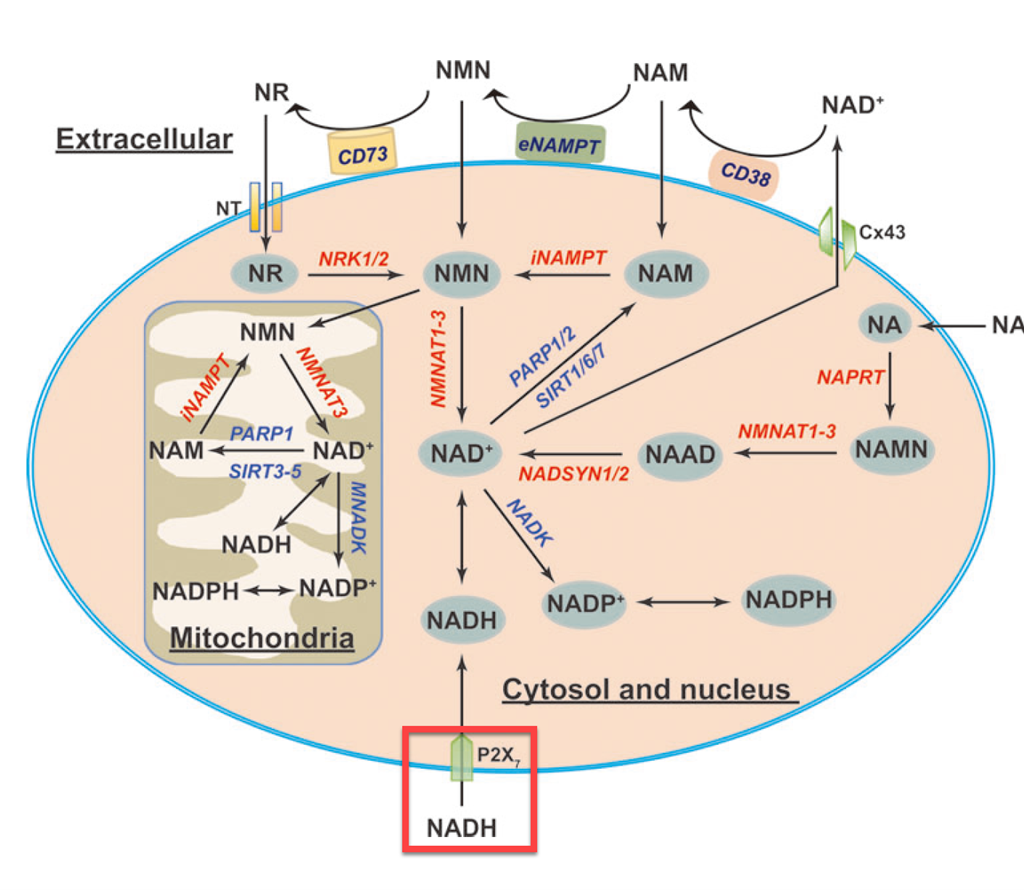
Comparison NAD+ that cannot be transported across cell membranes, exogenous NADH can directly penetrate cell membranes. It is transported across astrocyte membranes through a P2X7 receptor-mediated endocytosis mechanism. After treating astrocytes with NADH, both intracellular NADH and NAD+ levels increase.
Crystal Form
Because of the poor stability, NADH is easy to decompose, and the need for storage at around -18°C, the application of NADH is limited.
Our company developed a stable crystal form NADH disodium salt and submitted a patent for the crystal form of NADH disodium salt and its preparation method to the China Patent Office, with the patent number ZL2024116315931. This crystal form has the advantages of good stability, good moisture resistance, and a simple preparation method.
Formulations
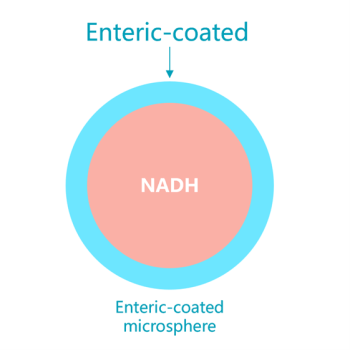
NADH may not stable under stomach acidic conditions. We plan to develop the following NADH formulations and formulate NADH into enteric-coated microspheres. The enteric layer is made of special polymer materials, does not dissolve in the acidic environment of the stomach but can dissolve or disintegrate in the neutral or weakly alkaline environment of the intestines, thereby enabling the drug to be released in the intestines.
Application of NADH
NADH is utilized in dietary supplements aimed at enhancing energy metabolism and cognitive function.
NADH supplementation has shown potential in improving cognitive performance in individuals with neurodegenerative conditions like Alzheimer's disease.
As a coenzyme in cellular respiration, NADH plays a crucial role in ATP production, thereby supporting overall energy levels.
Enhancing NAD⁺ levels through NADH supplementation may offer therapeutic benefits for cardiovascular diseases by improving mitochondrial function and reducing inflammation.
NMNH is reduced β-nicotinamide mononucleotide, which is a new nicotinamide adenine dinucleotide (NAD+) precursor, involves in electron transport in vivo, connects the tricarboxylic acid cycle and respiratory chain. Compared with NMN and NR, NMNH has better bioavailability and stronger NAD+ retention. Common salts of NMNH include disodium salt NMNH-2Na and calcium salt NMNH-Ca.
Structure
Chemical Name: Reduced β-Nicotinamide Mononucleotide
NAD+ levels markedly increased in liver, kidney, brain, and gastrocnemius samples liver from untreated and NMNH-treated animals.
NMNH compare with NMN
Supplementation with NMNH under normoxic conditions led to a 5-fold increase in the NAD+ content, whereas at a similar concentration, NMN was only able to double basal levels.
* The data is from literature: The FASEB Journal. 2021;35:e21456.